ONO SOKKI Co.,LTD

  HOME > Products Information > Rotary Encoder Application Index  
AAES_logo
 

Categories

Rpm& Speed

Dimension

Encoder

Torque Meter

Sound

Vibration

FFT


These are some system configurations of our products. If you need more information or support for our products, please feel free to contact your nearest distributors or us by e-mail at overseas@onosokki.co.jp.


FFT

見出し Vibration analysis


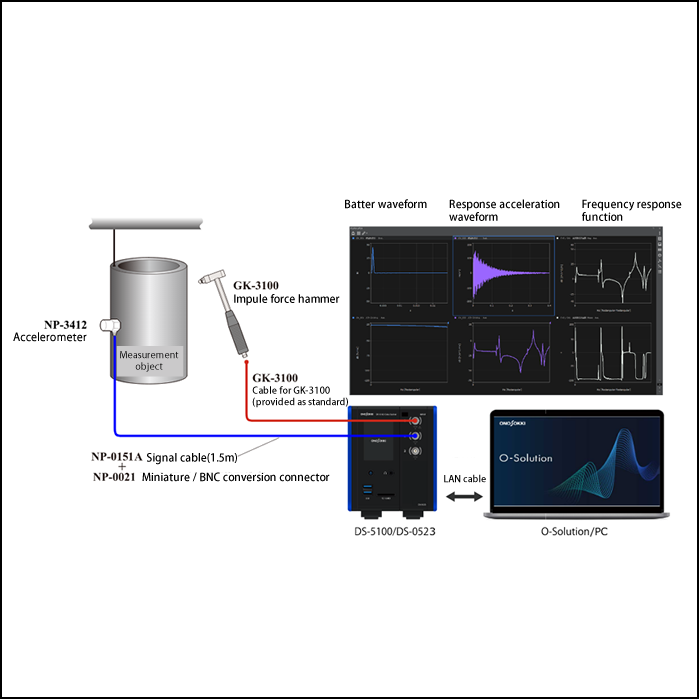
Measuring natural vibration frequency and damping ratio by hammering test

This example shows how to measure natural vibration frequency and damping ratio etc. Suspend a measurement object in a free vibration (or place it on something soft) and perform hammering test by the GK-3100 Impulse hammer. And then detect the free damping vibration by an accelerometer. The DS-2000/3000 series calculates the frequency response function of acceleration (A) and hitting force (F) by applying them the calculation, and obtains the resonant frequency at the peak of (A) / (F).

[FFT V-1-1]
 

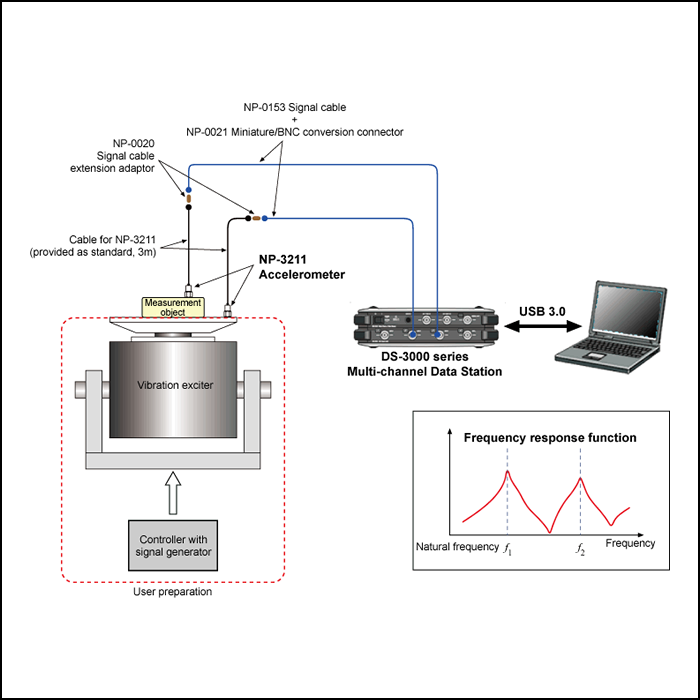
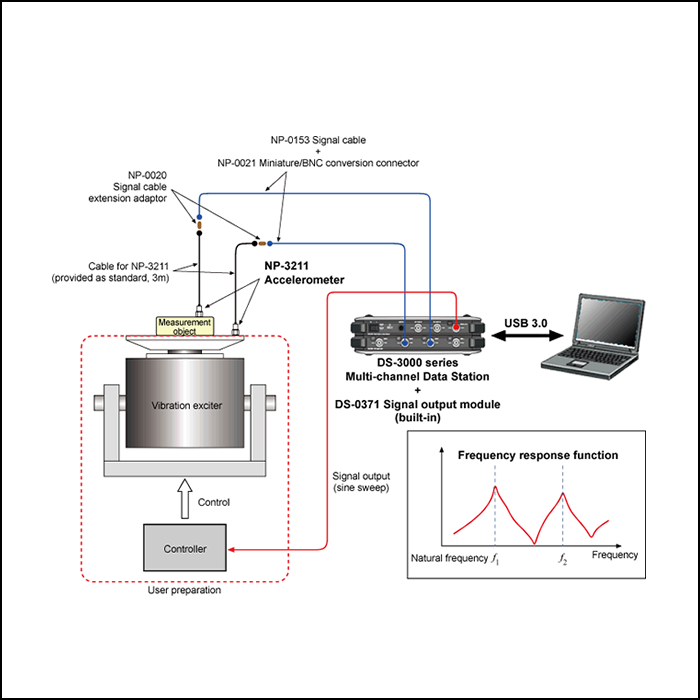
Measuring natural vibration frequency by sine sweep using internal signal from an exciter controller.

Sweep excitation is one of the methods to measure natural frequency of parts etc.
The sweep averaging function of the DS-2000/3000 series calculates the frequency response function of the vibration on the excitation table and acceleration of measurement object by sine sweep.

[FFT V-1-2]

見出し Acoustic analysis


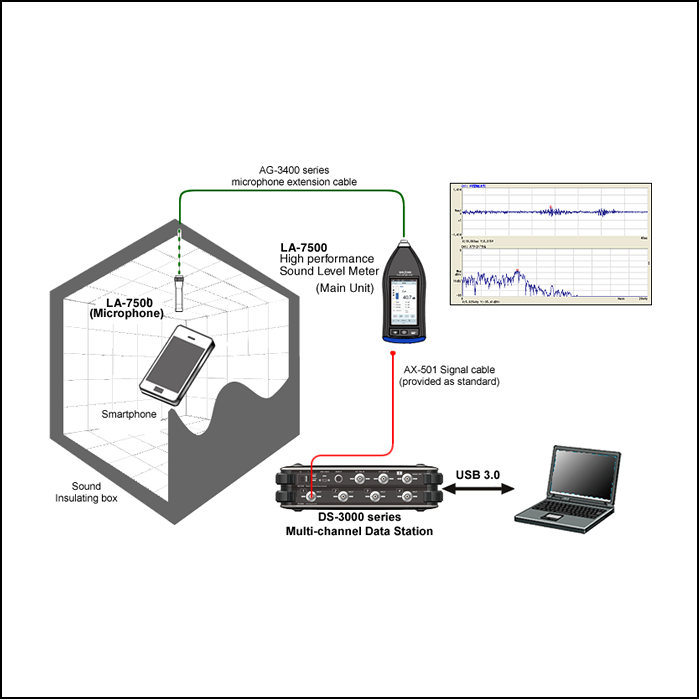
Sound analysis of a cell phone

Using the DS-3000/2000 series Data station and the LA-5560 Integrating sound level meter, acoustic characteristics of ringtone from a cell phone are obtained while monitoring the sound pressure level.

[FFT S-1-1]
 

Measuring frequency characteristics and harmonic distortion of a speaker sound

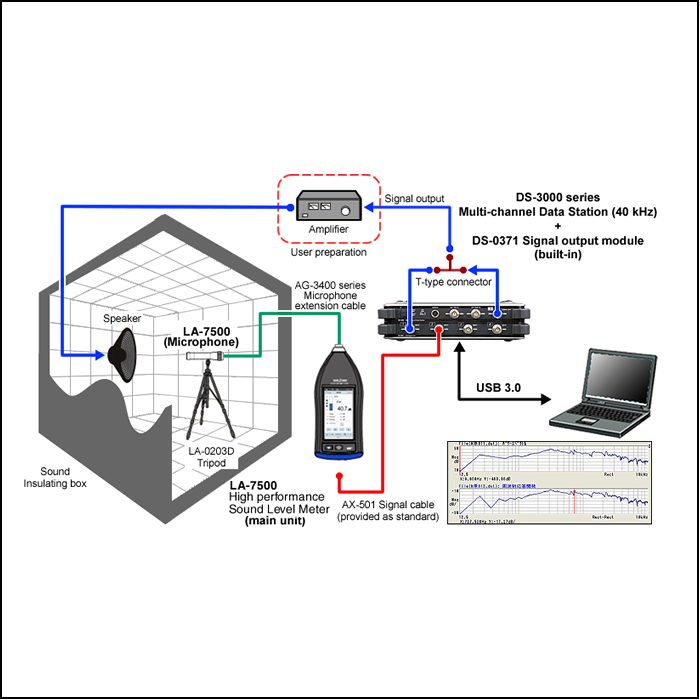
For measuring frequency characteristics or harmonic distortion of speaker sound, use the sine sweep signal output from the DS-0271A/ 0371 signal output unit installed in the DS-2000/3000 series data station. Measure the speaker sound of the sine sweep signal output by the sound level meter. The frequency characteristics of the speaker can be obtained by calculating the frequency response function between the sine sweep signal and the AC output signal from the sound level meter. The harmonic distortion of the speaker can be measured by using the fixed sine wave signal output from the DS-0271A/0371.

[FFT S-1-2]
 

Octave analysis of noise from OA equipments and home appliances

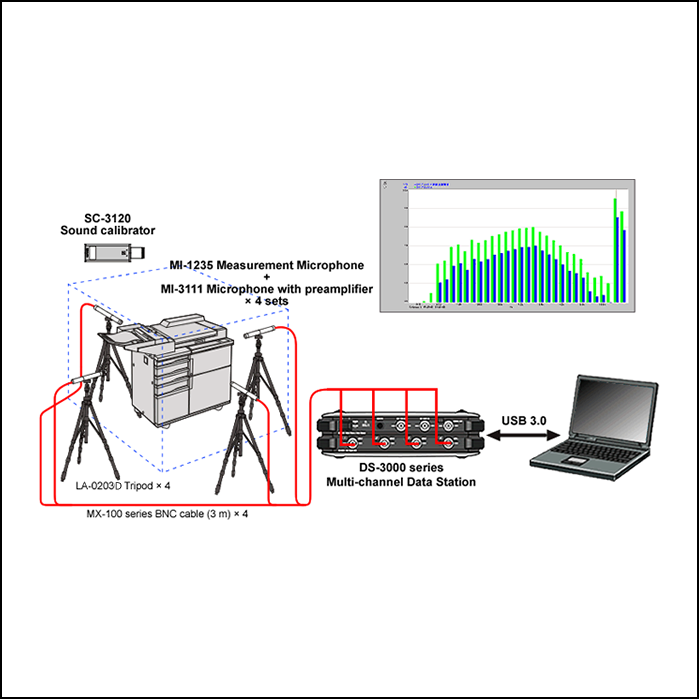
The 1/1 and 1/3 real time octave analysis is useful for reducing noise from OA equipments, and home appliances such as air conditioners or refrigerator. In this example, four microphones are set at bystander position surrounding the measurement object to obtain the noise. It also can be set A, C or Z-weighting sound filter for a microphone. And, measured signal by the microphones are input to the DS-2000/3000 series to perform octave analysis. Then you can see the accurate noise data numerically with various display functions, such as data comparison between before and after noise countermeasure, 3D display or trend display (time series variation) of specified frequency band. Up to 32ch-system also can be assembled.

[FFT S-1-3]

見出し Fluctuation · imbalance analysis


Speed fluctuation analysis of production line of paper, film, or similar product

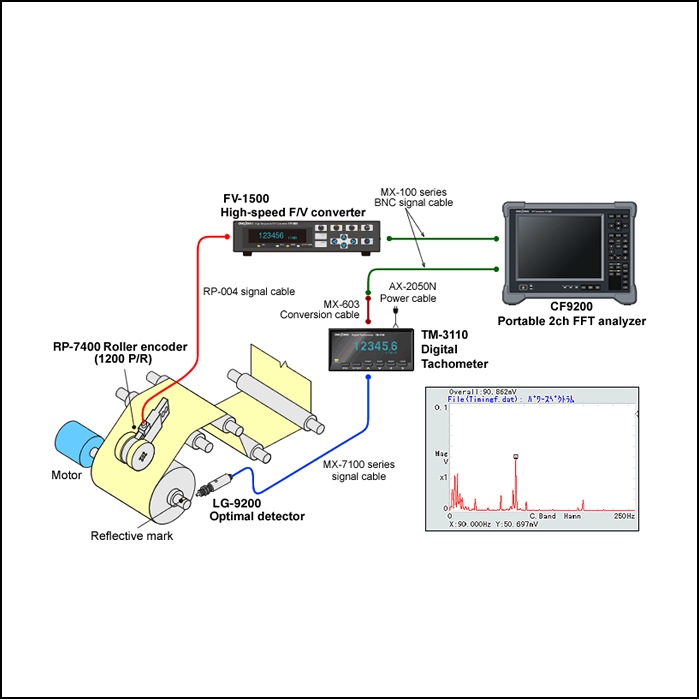
This example shows how to analyze rotation speed fluctuation (rate of rotation variability) of a take-up roller for paper pulp, a magnetic tape, an industrial film, or a similar product. The RP-721 roller encoder (1200 pulses/1 rotation) is used for the analysis. The RP-721 detects line speed of an object to be measured with its roller in direct contact with the object. Then the FV-1400 high-response F/V converter calculates the variable period of the line speed and outputs it to the CF-7200A Portable 2ch FFT analyzer. On the CF-7200A, the rate of speed fluctuation is obtained by performing frequency analysis of the speed fluctuation.

[FFT F-1-1]
 

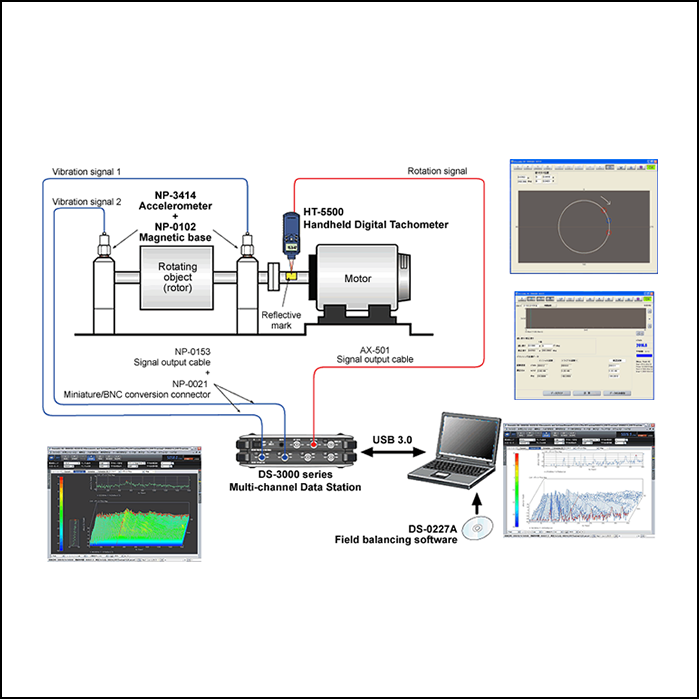
Imbalance correction of rotating object (field balancing)

This example shows how to correct imbalance of a rotating object such as a fan or a roller at a certain rotating speed optimal for easy measurement of the imbalance. Imbalance appears as first order vibration of rotation.
For the imbalance correction, "one plane-one condition correction", "one plane-two conditions correction", "two planes correction", etc. can be performed.

[FFT F-1-2]

見出し OK/NG judgment, quality control (using PC or PLC* etc.)


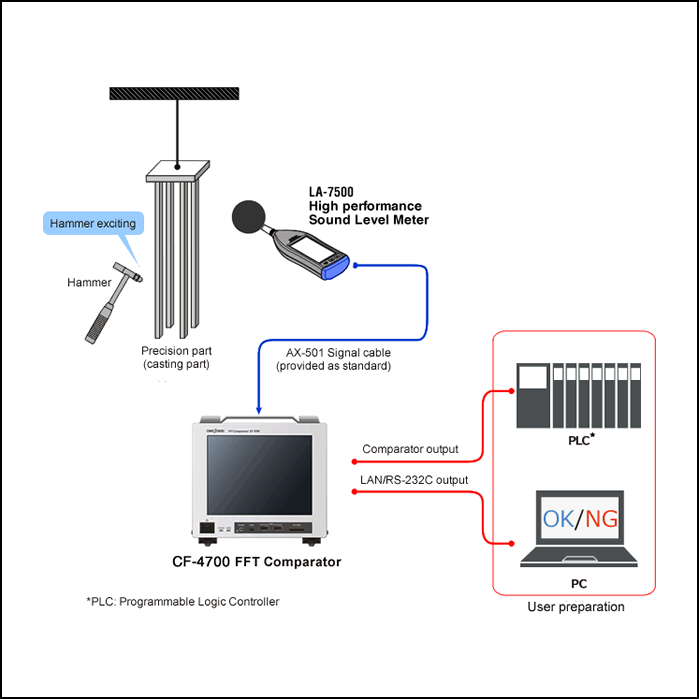
OK/NG judgment of metal parts by hammering sound

In this example, the hammering sound of a metal part (e.g. a casting part) suspended in free vibration is measured by the LA-5560 Integrating sound level meter. The CF-4500 performs frequency analysis of the AC output from the LA-5560 to find difference of power spectrum shape between OK and NG products. The Shape comparator function of the CF-4500 can be used for OK/NG judgment by the difference of power spectrum shape.

[FFT Q-1-1]
 

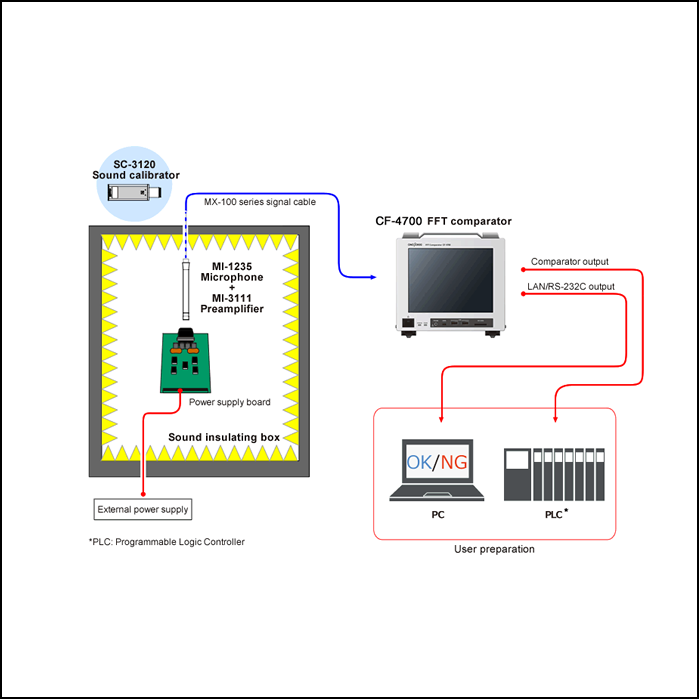
OK/NG judgment of the generated noise from power supply board on a production line

Prepare a sound insulating box to avoid the influence of the background noise. In the sound insulating box, the sound coming from the power supply board is measured by the MI-1234 Microphone and the MI-3111 Microphone preamplifier, and then input to the CF-4500 FFT Comparator. It can make OK/NG judgment with areal rate of content in power spectrum by setting up of a judgment block around the power frequency caused the noise.

[FFT Q-1-2]
 

OK/NG judgment of a motor on a inspection line

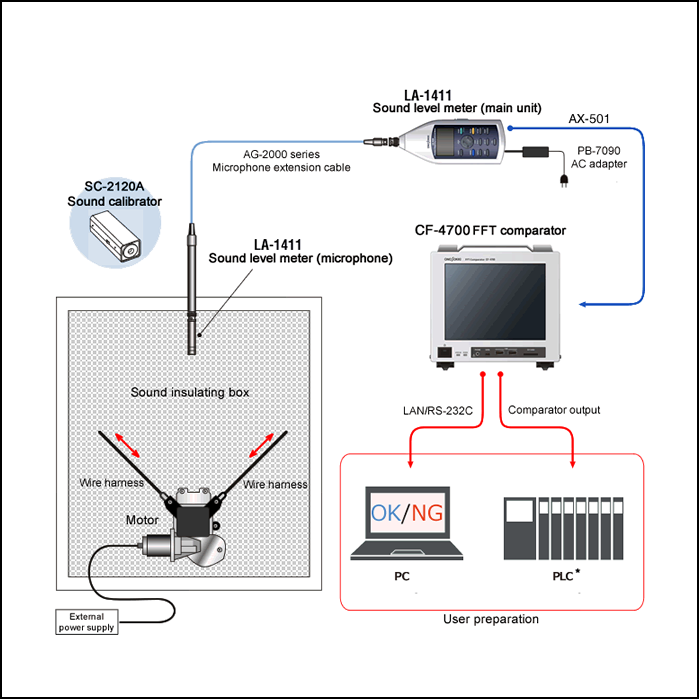
The block comparator function makes OK/NG judgment by the judgment block area (maximum setup: 20 blocks) set in a certain frequency range and level range. Level, peak level, peak max, section overall, areal rate of content judgment methods are available for each block. You can make OK/NG judgment with the most appropriate one selected from the five judgment methods. Also the digital I/O function enables control via PLC using comparator output.

[FFT Q-1-3]
 

Judgment of vibration caused by rotation imbalance of a turbo fan

When the turbo fan has imbalance, power spectrum level of the rotation frequency of a signal from the vibration sensor increases. By using the CF-4500 FFT comparator, defining the target frequency band and the judgment level, and specifying the judgment block, OK/NG judgment is performed. In this case, the "peak max" is selected as the judgment method. If the maximum value of the waveform exists in the specified block area, it means OK. If not exists, it means NG.

[FFT Q-1-4]
 

Rotation tracking analysis of a transmission unit and quality control on computer through LAN

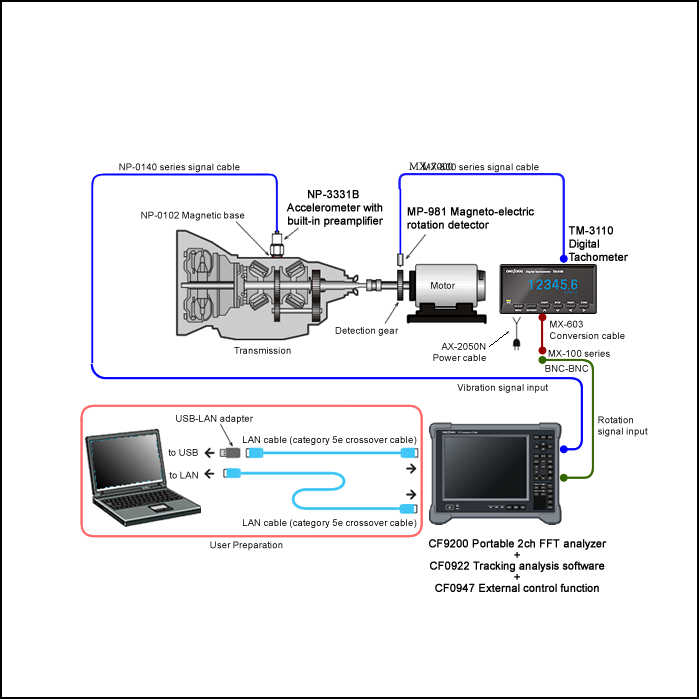
Rotation-tracking analysis for an inspection process of a transmission unit and performs quality control based on variation of vibration level along with the rotating speed. The CF-7200A portable 2ch FFT analyzer with the CF-0722 tracking analysis software can perform tracking analysis of variation of the vibration level of the rotational order component along with increase or decrease of rotating speed.

[FFT Q-1-5]
 

Quality control of a stepping motor (statistical processing of vibration level and frequency spectrum)

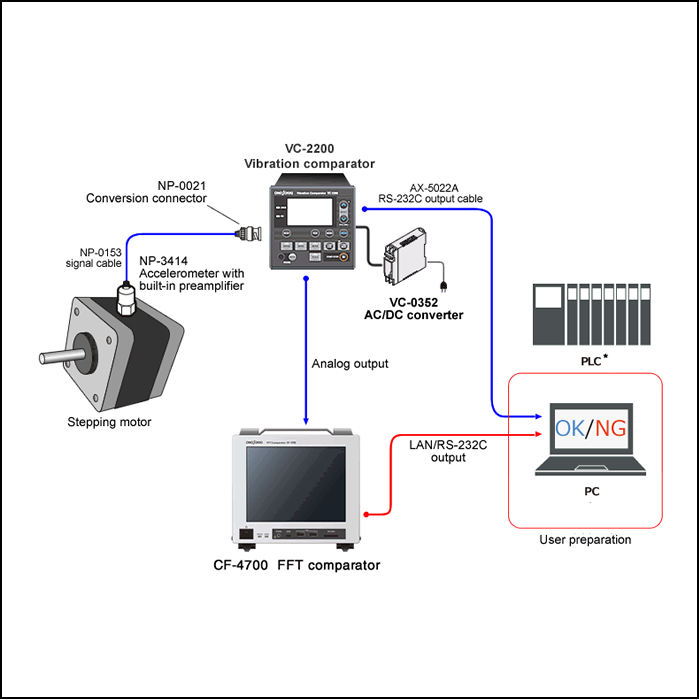
This application makes OK/NG judgment of a stepping motor using vibration level and frequency analysis spectrum. The NP-3414 accelerometer with built-in preamplifier detects a signal and outputs it to the VC-2100 vibration comparator. The VC-2100 makes judgment based on the vibration level and sends the result to the PC. Also the VC-2100 outputs an analog signal to the CF-4500 FFT comparator, which performs frequency analysis of the signal. This enables block comparison of vibration level of the stepping motor which cannot be judged by only the VC-2100 to deliver a final judgment. The judgment result is sent to the PC in a similar way and saved.

[FFT Q-1-6]
 

Quality control based on rotation speed variation of a DC motor or a fan motor

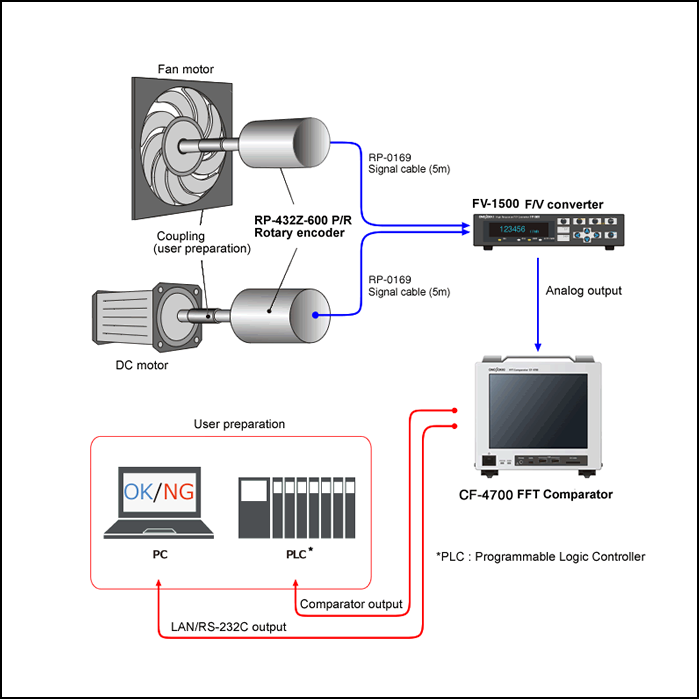
This application performs quality control based on rotation speed variation level of a DC motor or a fan motor. The rotation frequency obtained from rotating speed of the DC motor or the fan motor and the number of pulses generated by the rotary encoder (the 600 P/R in the illustration above) are input to the FV-1400 F/V convertor as the center frequency. The FV-1400 outputs deviation from the specified center frequency (corresponding to rotation speed variation) as an analog signal. The CF-4500 performs frequency analysis of the deviation output and block comparison of amplitude levels of the deviation spectrum.

[FFT Q-1-7]
 

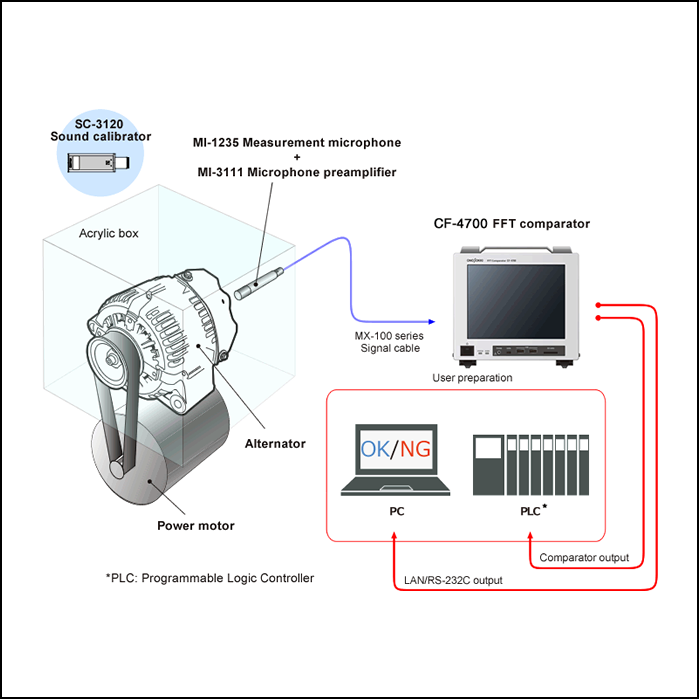
Quality control based on amplitude-modulated noise (whining noise) of an alternator

For prevention of effect of background noise, the alternator is enclosed in an acrylic box for simple noise insulation. The alternator is driven by a drive motor. The MI-1235 microphone and the MI-3111 microphone preamplifier pick up the alternator's noise and output a signal. The CF-4500 FFT comparator receives the signal and performs FFT frequency analysis. A defective product generates amplitude-modulated noise (whining noise). The amplitude-modulated noise (whining noise) appears on the power spectrum as adjacent multiple frequency peaks. OK/NG judgment of the alternator is made depending on the peak level on the power spectrum of whining noise.

[FFT Q-1-8]
 

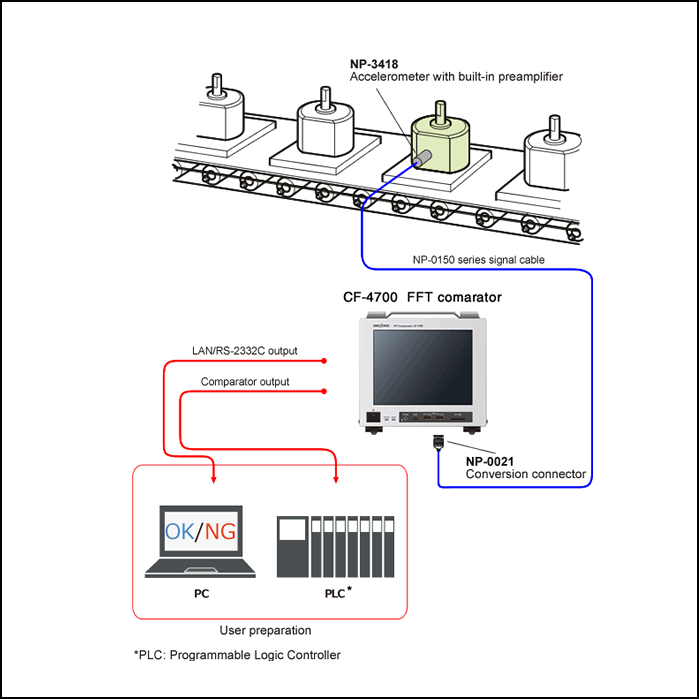
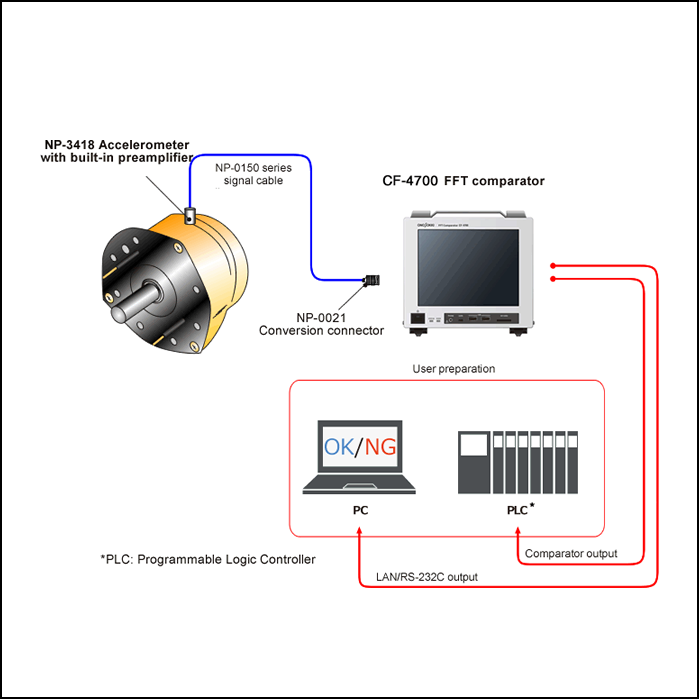
Quality control of ABS motor

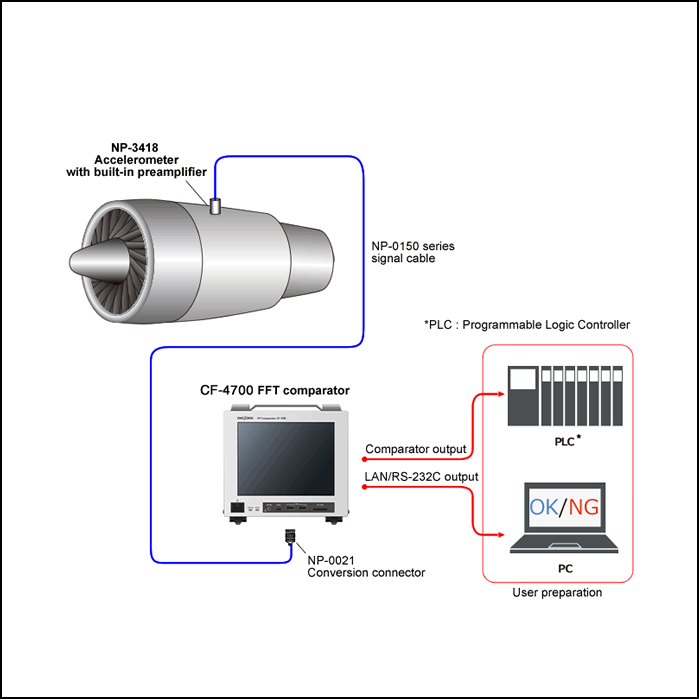
The NP-3418 accelerometer with built-in preamplifier detects vibration of the bearing inside the rotating ABS motor and sends a signal. The CF-4500 FFT comparator receives the signal and performs FFT frequency analysis. If the bearing has a defect such as abrasion, the harmonic component increases. The CF-4500 makes OK/NG judgment of the ABS motor depending on the partial overall value on the power spectrum of the harmonic component. Also OK/NG judgment can be performed depending on the first to third -order component of rotation on the power spectrum detected by the peak hold function while varying the rotating speed.

[FFT Q-1-9]
 

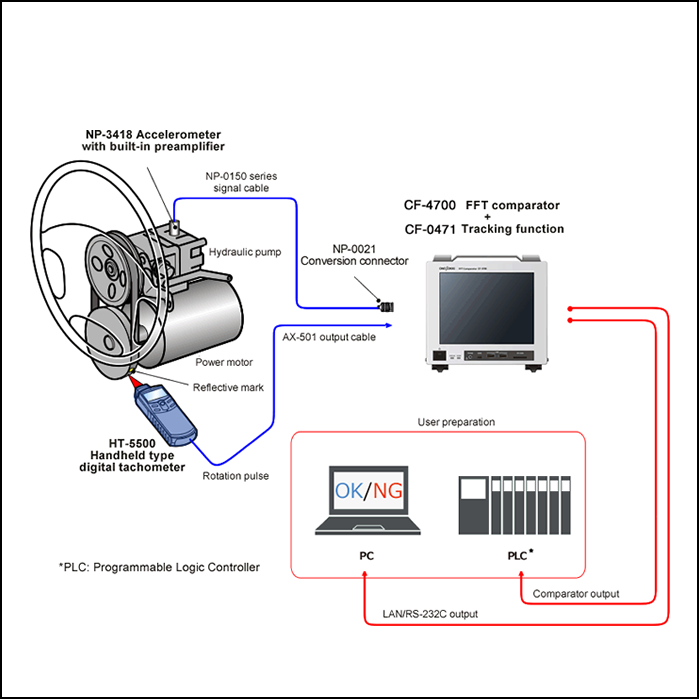
Quality control of power steering pump

When a hydraulic pump for the automotive power steering is driven by a drive motor to generate hydraulic pressure, pulse pressure vibration occurs. The vibration detected by the NP-3418 accelerometer with built-in preamplifier and the rotation pulse of the drive motor detected by a rotation detector are sent to the CF-4500 FFT comparator. The peak hold function of the CF-4500 detects amplitude of the first to the n-th order component of rotation for pulse pressure vibration. ON/NG judgment power steering pump is made depending on the peak level.

[FFT Q-1-10]

見出し Other analysis (special purpose usage) )


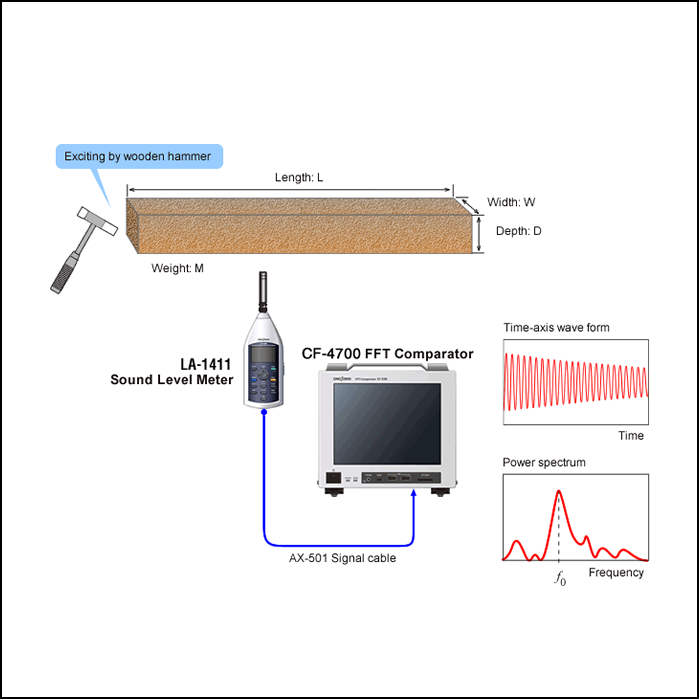
Measuring Young's modulus of timber

Dynamic Young's modulus of timber for building materials can be measured by basic frequency of sound. The LA-1410 sound level meter detects the timber sound hammered by wooden hammer etc. The power spectrum of the detected sound is measured by using trigger function and averaging function of the CF-4500 FFT comparator. And the peak frequency of the power spectrum “fo” refers to set as the number of basic vibration of timber “fo”. The Young's modulus is calculated by the following math formula from the dimension and weight of the timber. The measurement is performed in the environment without ambient noise.

[FFT O-1-1]
 

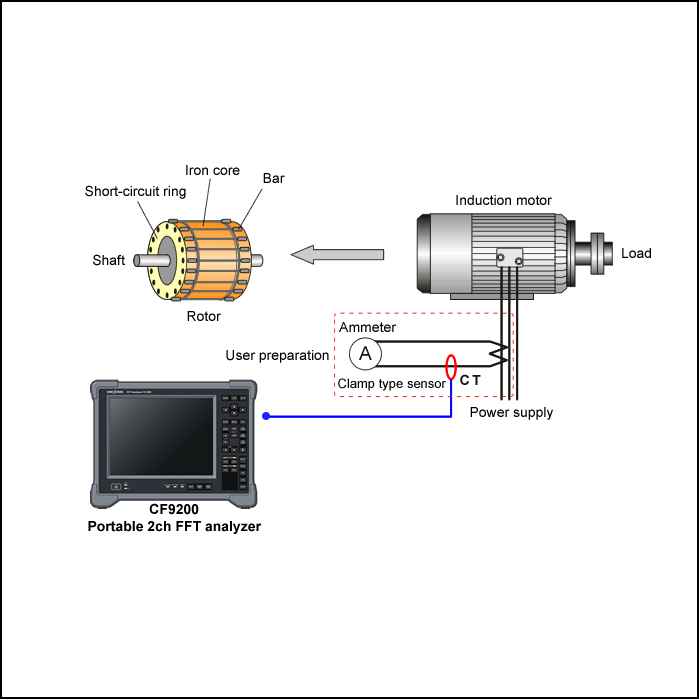
Breakage diagnosis of rotor bar in squirrel cage induction motor

If an abnormality such as breakage caused by stress due to aging occurs on the rotor of an induction motor, unbalanced current flows in the rotor and load current of the motor pulsates as a result. When unbalanced current flows, sideband waves ±2sf are generated with respect to the fundamental wave f on the current spectrum as shown in the following figure. This pulsation current ratio is almost proportional to the extent of rotor abnormality. By measuring pulsation current with a clamp type ammeter and analyzing frequency spectrum variation of the pulsation current with an FFT analyzer, breakage of a bar or a rotor can be diagnosed.

[FFT O-1-2]
 

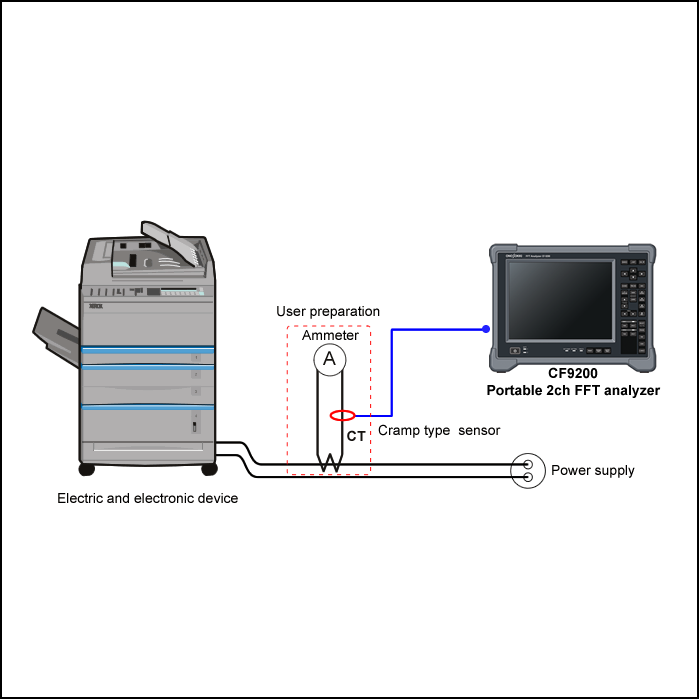
Measurement and evaluation of harmonic component of current flowing electric and electronic devices

Under normal circumstances, the electrical power supply has a frequency of 50 Hz or 60 Hz representing a single sine wave. However, due to a pulsating circuit load of a device, an actual current includes large harmonic components and does not represent a sine wave. This harmonic distortion flows into the supply and distribution systems and may cause disorder such as abnormalities on other connected equipment or distortion of alternating voltage. The FFT analyzer enables analysis of the harmonic distortion. By measuring variation of power current with a clamp type ammeter and performing frequency analysis of power current waveform with the FFT analyzer, harmonic distortion of higher order component and total harmonic distortion of the fundamental wave (50 Hz or 60 Hz) can be evaluated.

[FFT O-1-3]


Contact Us Questions and Inquireies (Feedback form) Back to previous page