





Ono Sokki’s torque meters and detectors use original phase difference method and have the advantage of repeatability and accuracy in wide rotation range. Because of non-contact detection, there is no need for parts replacement such as spring and blush. Easy maintenance and long service life. Wide choice of models from 2mN· m to 50 kN· m depending on your application.
Range of detection
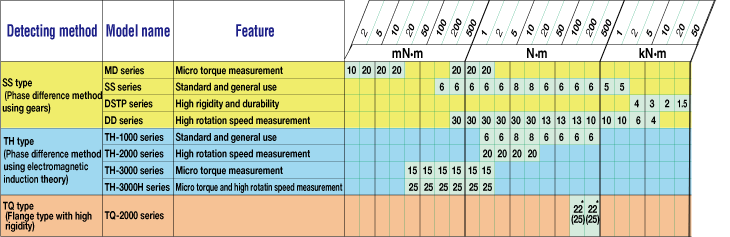
The value in each box : maximum rotation speed [unit:1,000 r/min]
(The value in parenthesis : option)
* TH type: Phase difference method using
electromagnetic induction theory
* SS type: Phase difference method using gears
| TH type torque detector: Phase difference method using electromagnetic induction theory | |||||
|---|---|---|---|---|---|
|
|
||||
 |
 |
||||
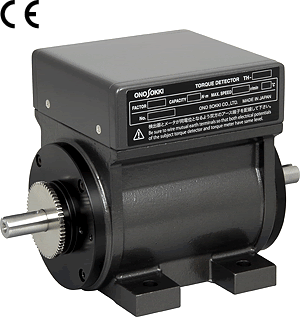
 • High
accuracy:±0.1 %/F.S
• Enables
high rotation speed measurement (TH-2000 series):20,000
r/min of rotating shaft can be measured.
• Line driver
output having great noise resistance
• No need for
switching rotation direction (CW/CCW)
• High speed
analog output
• No need for matching:The matching is not required when the cable length
is changed. Up to 50 m of cable can be used.(signal cable:
option)
• Mounting diameter is same as the SS series : Easy to replace.
• Applicable
to CE marking, FCC (All TH series) CE:EN61010-1, EN61326-1 FCC:Part 15B |
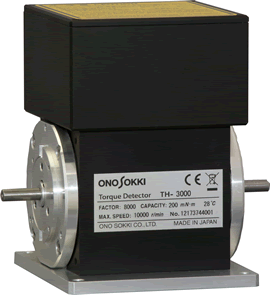
• High response:Up
to 5 kHz of torque change can be measured
• Enables
high rotation speed measurement (TH-3000H series): Up to
25,000 r/min of rotating shaft can be measured.
• High
accuracy:±0.2 %/F.S.
• Original
overload-resistant mechanism:Withstand against up to 3 Nm of
overload torque.
• Line driver
output having great noise resistance: Line driver output
with strong noise immunity.
• The
matching is not required when the cable length is changed.
Up to 50 m of cable can be used.
• Compatible
size with MD series Easy replacement from MD series.
• High
durability: Non-contact detection. No moving part brings
ease of maintenance and less trouble. |
||||
 |
|
||||
 |
|
||||
↑ Click the each model for details. |
|||||
| SS type torque detector: Phase difference method using gears | |||||
|---|---|---|---|---|---|
|
|
||||
 |
 |
||||
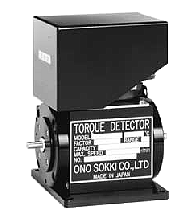
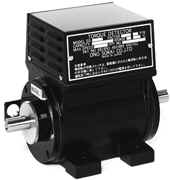
• High
accurate detection of micro capacity torque
• Focused on
measurement: Low moment of inertia and small starting torque
• Wide
measurement range: From stationary condition (0 r/min) to
high rotation speed
• Becomes
available up to 20,000 r/min by adjustment (excluding
MD-201C) |
• In-stock
items, cost-effective type
• Wide
measurement range:From stationary condition (0 r/min) to
high rotation speed
• Excellent at
overload resistance |
||||
TS-3200A |
TS-3200A |
||||
|
|
||||
↑ Click the each model for details. |
|||||
| SS type torque detector: Phase difference method using gears | ||
|---|---|---|
|
||
 |
||
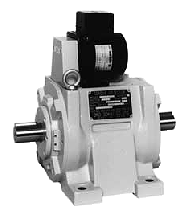
• Robust design torque detector capable of measuring from stationary axis to high speed rotating axis.
• Excellent at
overload resistance
• High
accuracy: 0.2%/F.S.
(At the time of N-0 correction in combination with TS-3200A) • Wide
measurement range:Enables continuous measurement up to 180 %
of rated torque
• Wide
measurement range:From stationary condition (0 r/min) to
high speed rotation |
||
TS-3200A |
||
|
||
↑ Click the each model for details. |
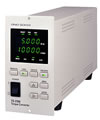
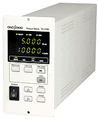
| Torque Meter | |||||||||||
|---|---|---|---|---|---|---|---|---|---|---|---|
|
|
|
|
||||||||
 |
 |
 |
 |
||||||||
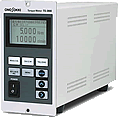
• Can be
connected TH type** and SS type** torque detectors by Ono
Sokki.
• Compact and
space-saving design is enough to fit your measurement system
• Analog
output response (time constant) can be selected depending on
your application.
• Output of
rotation pulse signal required for rotation tracking
analysis of torque ripple |
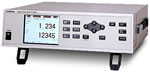
• 10 kinds of
detector setting can be memorized.
• Displays
maximum, minimum, p-p value, and absolute value
• Available
panel fixing with optional mounting fixture
• 10 points of
N-0 compensation for each CW, CCW |
• Compact and
space-saving design is enough to fit your measurement system
• Isolated
voltage output enables connection to data processing devices
and control devices isolated analog voltage
• Enables N-0
compensation |
• Focused on
measurement: Low moment of inertia and small starting torque
• Wide
measurement range:
• Becomes
available up to 20,000 r/min by adjustment |
||||||||
 MD series SS series DSTP series DD series |
SS series DSTP series DD series DD-2000 series |
SS series DSTP series DD series |
|||||||||
|
|
|
|
||||||||
↑ Click the each model for details. |
|||||||||||
* Discontinued products
** TH type: Phase difference method using electromagnetic induction theory
SS type: Phase difference method using gears
Revised:2019/8/01



